
Serverless Architecture

There are two popular takes on serverless architecture:
– It’s expensive
– It’s just “functions as a service”
Both are fundamentally wrong and usually point to a misunderstanding of what serverless is really about.
In a traditional server-based system, about 90% of the code is garbage. Moving data from one place to another, transforming types, reading and writing storage, building layers of abstractions on top of more abstractions.
Only about 10% actually represents real business logic.
The problem with this “garbage code” is that you still have to write it and maintain it.
The biggest issue with that approach is slower time to market.
A less obvious but very painful one is cost. HR costs dominate modern software development.
You can easily find the theory yourself, so let me give you something practical.
I built a FinOps product from scratch that reduces infrastructure costs for Fortune 100 companies.
I personally analyzed their infrastructure spending. And here’s the reality:
the salary of a single DevOps team often exceeds the total infrastructure cost of the entire company.
Hardware is a commodity, like bread. Over time, it only gets cheaper.
Serverless lets you delegate 90% of that garbage code to managed services and focus on the 10% that actually matters.
“But isn’t it cheaper to run everything on-prem?”
Infrastructure might be cheaper, sure.
But HR costs will grow significantly and dominate.
The total cost of ownership ends up much higher than a serverless alternative.
Why try to optimize a commodity? This is exactly the mistake you’ll see in most criticism of serverless.
Sometimes it’s just ignorance, sometimes it’s deliberate manipulation.
And it’s not just about infrastructure, it’s also about everything around it.
With serverless, you get infinite automatic scaling, high availability, durability, and more out of the box.
With traditional server setups, all of that has to be built and maintained manually by expensive experts.
What changed with AI?
A server-based system that used to take a year to build can now be replaced with a serverless solution in a matter of days.
Generate the configuration, add minimal code, and you’re done.
Example.
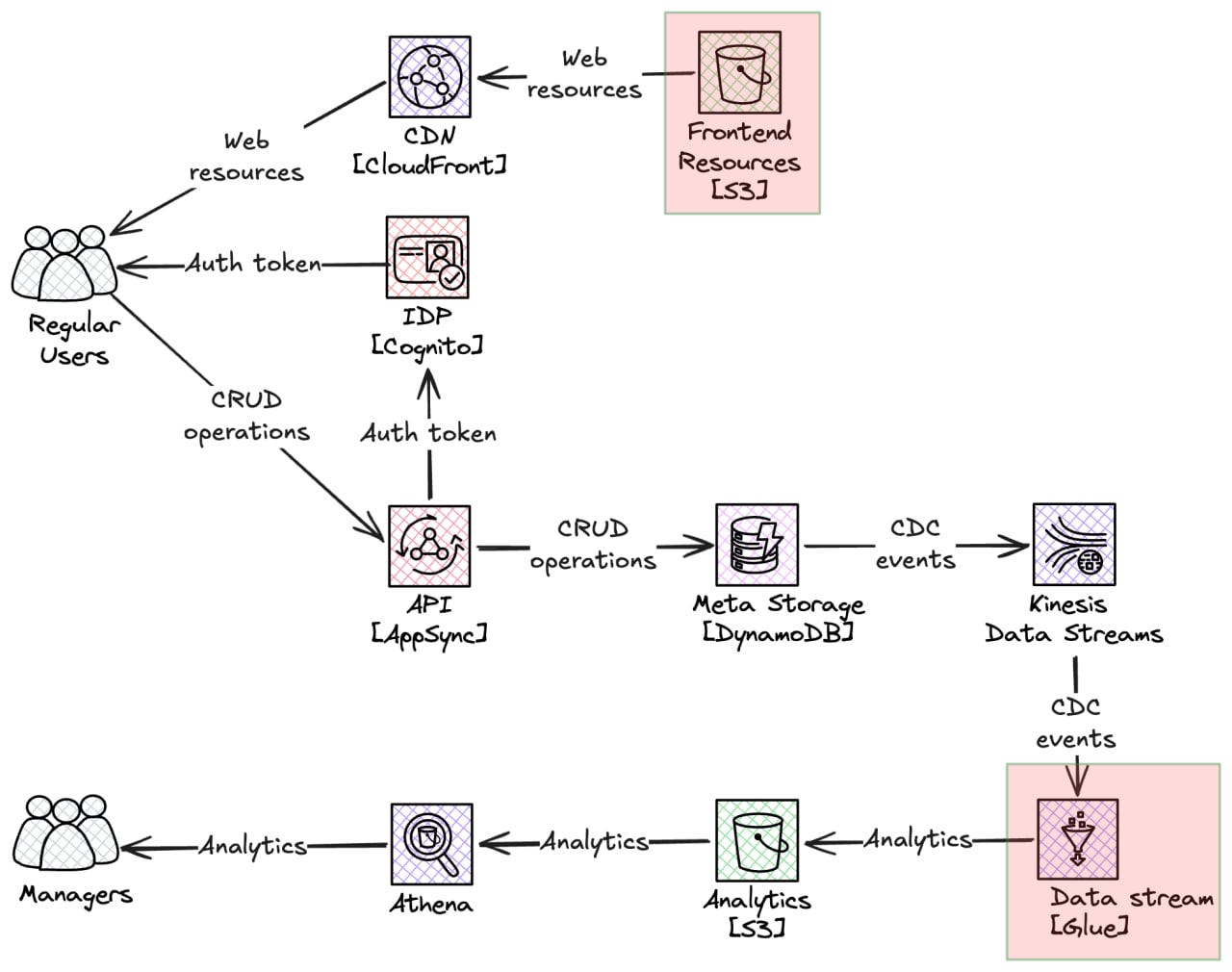
In the attached diagram, you see a typical serverless architecture for a web application.
It uses AWS services since they’re the most advanced today.
Regular users interact with data. Their managers see analytics on top of that data.
The only places where you actually need code are highlighted in red: frontend and minimal data transformation in streaming.
That’s what modern architecture looks like now.